
Root Cause Guide to Spring Allergies
Every spring, as trees bloom and the air warms, many people simultaneously brace themselves for the familiar wave of sneezing, congestion, itchy eyes, and fatigue. Seasonal allergies are often brushed off as inevitable and common, but common doesn’t mean normal and allergy symptoms are a sign that the body is overwhelmed and in need of support.
From a holistic perspective, spring allergies are less about exposure to the various environmental triggers alone and more about how your body responds to that exposure. When we understand the “why” behind the symptoms, we can shift from simply managing them to actually reducing their intensity, frequency, and supporting the body in the ways it needs.
What’s Actually Happening in the Body
At their core, seasonal allergies are an immune system overreaction, often due to a toxin burden that is already overwhelmed or close to, so the addition of environmental allergies tips the scales and results in symptomology.
When pollen enters the body, an imbalanced immune system often identifies it as a threat and send the troops (other immune cells) to react and sound the alarm. This triggers the production of IgE antibodies, which activate mast cells, causing them to release histamine. This histamine release drives many classic allergy symptoms:
Sneezing
Itchy, watery eyes
Runny nose
Mucus production
In addition to histamine, other inflammatory messengers known as cytokines and leukotrienes are also released and amplify the response, contributing to congestion, airway constriction, and systemic inflammation.
Simultaneously, your body’s barrier systems, including the gut lining and respiratory tract, play a critical role. When these barriers are compromised or more permeable, the immune system becomes more reactive, increasing sensitivity to otherwise harmless exposures.
Finally, the body must be able to break down and clear histamine efficiently. This relies on enzymes (like DAO), good liver function, and a healthy microbiome. When clearance pathways are sluggish, histamine can accumulate and result in intensified allergy symptoms, among other systemic issues.
Why Some People Struggle More Than Others
Not everyone exposed to environmental allergens develops symptoms. This is where the concept of total load comes in and this is best illustrated by the bathtub analogy. Stressors of varying etiology (ie water from the faucet) fills the bathtub, and the drain represents the body’s ability to remove and handle the load. When the drainage is working optimally, and the bathtub isn’t filling faster than draining, the body is able to generally maintain homeostasis.
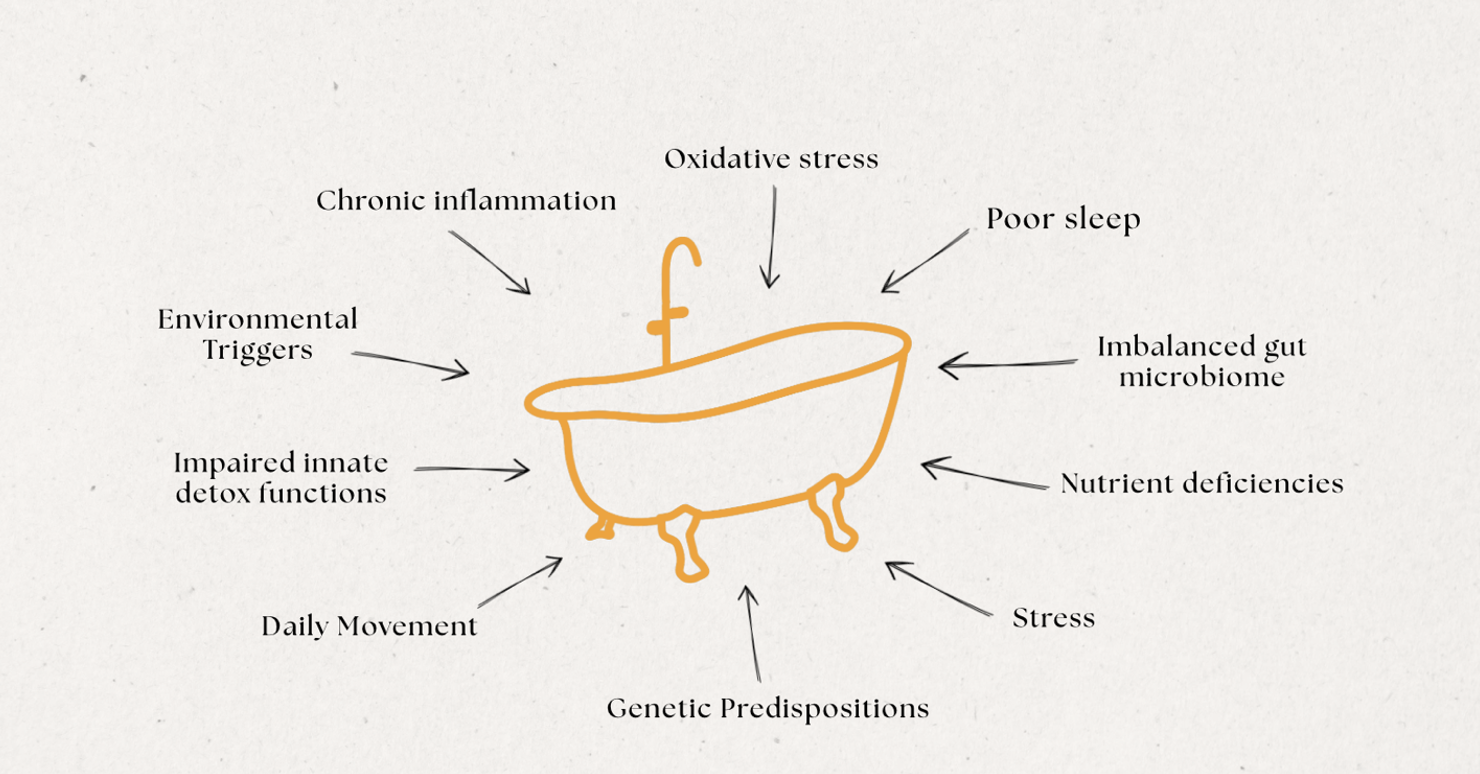
Your body has a threshold for what it can tolerate. When the cumulative burden into the bathtub increases, and the drain is not functioning well, we quickly exceed the bodily threshold and have “spillover”, often resulting in symptoms. In this way, the allergen(s) is often just the final straw, not the root cause. A few factors that contribute to the bathtub and impair adequate drainage:
Gut imbalances or inflammation
Mold or toxin exposure
Nutrient deficiencies
Chronic stress
Poor sleep
Previous immune challenges
Common Triggers
While tree, grass, and weed pollens are primary triggers in spring, they rarely act alone. Severity and types of exposure is also variable depending on your geographic location and regional climate. These exposures can compound, increasing overall immune activation. Other contributors include:
Mold spores (especially in damp indoor environments)
Dust mites and pet dander
Air pollution
Indoor irritants like synthetic fragrances and cleaning products
Reducing Allergen Burden at Home
One of the most effective strategies is simply lowering your daily exposure, starting at home and the places you spend the most time.
Improve indoor air quality:
Use a HEPA air purifier, especially in the bedroom - aim for filtration down to 0.1 microns
A few good brands: Levoit, Austin Air, Air Doctor
Keep windows closed during high pollen times
Change HVAC filters regularly (often monthly!)
Clean strategically:
Use damp dusting instead of dry dusting
Utilize vacuum with HEPA filter and change every 3 years (or go by what your specific filter indicates)
Wash bedding frequently in hot water
Control humidity:
Aim for indoor humidity between 40–50%
Address leaks promptly
Use dehumidifiers in damp areas
Workplace and On-the-Go Support
Unfortunately, exposure doesn’t begin and end at home. Luckily there are some simple strategies can help reduce your load throughout the day:
Keep car windows closed and use recirculated air
Consider a small air purifier at your desk
Supporting the Body from Within
Reducing exposure is only half the equation, supporting your internal environment is just as important. Nutrition is a huge variable in reducing your inflammatory load and aiding your body in its innate ability to detoxify and regulate your immune system.
Focus on an anti-inflammatory, whole-foods-based diet, minimizing processed foods and sugar, which fuels inflammation:
Colorful fruits and vegetables (rich in antioxidants)
Healthy fats (emphasis on omega-3s)
Adequate protein
Plenty of hydration
Temporary reduction of high histamine foods can be helpful for some
Helpful Nutrients and Supplements:
Vitamin C: supports histamine breakdown
Quercetin: helps stabilize mast cells
Omega-3 fatty acids: reduce inflammatory signaling
B6 and copper: histamine breakdown support
Herbal Medicine
Below are a few favorites for allergy support and symptom reduction, excellent when blending several herbs and taken in tea form. Please work with a herbal medicine trained practitioner to formulate a blend customized to you and your unique needs.
Nettle leaf: wonderful source of minerals and natures “anti-histamine”, stabilizes mast cells,
Hyssop: anti-microbial, mild expectorant that aids in opening airways
Dandelion leaf: gentle diuretic to reduce puffiness and swelling, mineral-rich
Licorice: immune-modulation, anti-viral and soothing to mucous membranes. Great for fatigue as adrenal support. Caution with high blood pressure.
Mullein: soothing to irritated mucous membranes and mild expectorant to clear stuck mucous
Cleavers: wonderful lymph mover that is specific to head and neck to address swollen lymph nodes and sinus congestion
Homeopathy: potentized medicines designed to stimulate healing and bring body back into balance
“Like cures like” - work with homeopathy-literate practitioner to determine appropriate remedy
A few remedies that can be helpful for allergies:
Allium cepa (onion): runny nose and watery eyes, often irritated upper lip
Nat Mur (salt): lots of burning sensations - burning eyes, nose. Often have concurrent headaches.
Euphrasia: itchy, watery, burning eyes or conjunctivitis. Sometimes have sensation of sand in the eyes. Bursting headaches.
Pulsatilla: dark, red rims around eyes with puffiness. Dry mouth but no thirst.
Urtica: excellent for hay fever symptoms, especially if in conjunction with skin rashes or eczema
Chinese Herbal Medicine - A Few Commonly Utilized Formulas
Yu Ping Feng San: preventative to strengthen wei qi (protective qi - akin to healthy, balanced immune system)
Cang Er Zi San: great for nasal and sinus congestion with thick discharge
Bi Yan Pian: classic “hay fever” with runny nose, itchy and watery eyes and sneezing
Other Supportive Tools
Helpful strategies to reduce symptoms while addressing the root cause of YOUR allergies include:
Saline rinses/neti pot
Steam inhalation
Local, organic honey
Hydration: helps flush out histamine and aids in bodies natural detoxification mechanisms
Nasal spray: saline, colloidal silver, and/or herbal infused
Gut Health and Immune Balance are Integrally Connected
Much of our immune system resides in the gut, so a healthy and balanced gut can reduce inflammation and your bodies reactivity to stressors, such as environmental allergens and pollen. In contrast, when our gut is imbalanced, perhaps dysbiosis (imbalance of beneficial and potentially harmful bacteria), impaired nutrient absorption, parasites, leaky gut, bacterial overgrowth and subsequent inflammatory compounds being released to combat the aforementioned imbalances, we are much more reactive to the environment and small amounts of a stressor often leads to big symptoms. Proper gut health can be supported with:
Fiber-rich foods
Prebiotics and (if tolerated) fermented foods
Targeted support if dysbiosis is present
Gut healing herbs to support lining integrity
When to Dig Deeper
If allergies are severe, worsening, or persistent year-round, it may be time to look beyond seasonal triggers.
Consider evaluating for:
Gut dysfunction utilizing functional stool testing such as Gut Zoomer or GI Map
Chronic inflammation – can often be done when looking at basic labs from a functional perspective
Mold exposure
Immune dysregulation – can get a good general understanding via a complete blood count (CBC)
A Different Way to Think About Allergies
Rather than seeing allergies as something to suppress, it can be helpful to view them as signals, indicating that your body is communicating that its total load has exceeded its capacity.
If you are experiencing allergies for the first time, or are a chronic sufferer, working with a provider that will view you in a holistic manner to address your unique health needs can help! By lowering our overall burden and supporting resilience, many people find their symptoms become more manageable, and that they are significantly less reactive overtime and begin to look forward to the beauty and arrival of Spring.
This content is for educational purposes only and is not medical advice. Always consult your physician or qualified healthcare provider before starting any new supplement, treatment, or protocol, especially if you are pregnant, nursing, or have prior medical conditions.