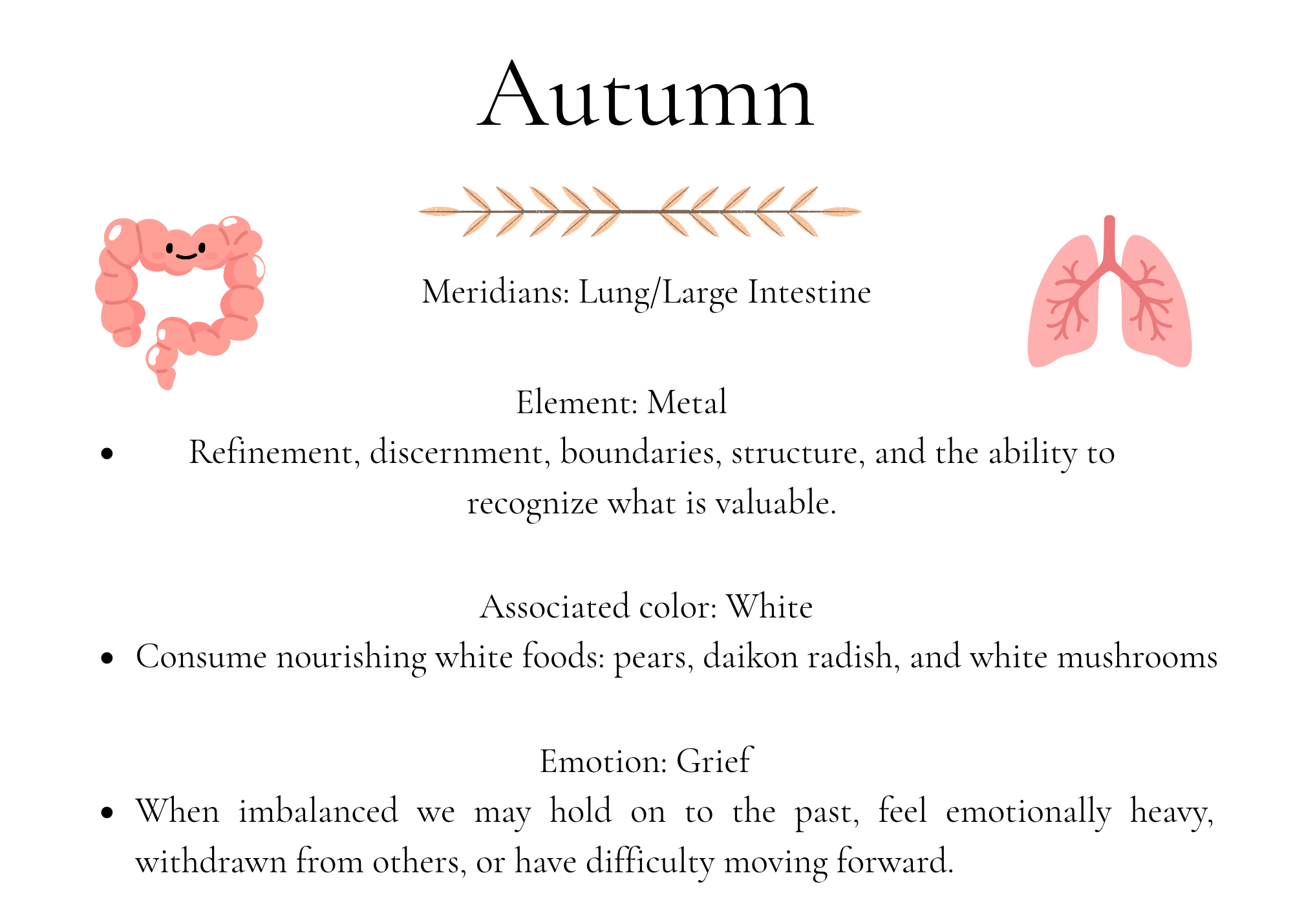
Fall is in full swing and in Traditional Chinese Medicine (TCM) this season marks the transition away from the yang energy of summer that is all about activity, warmth, and outward expansion, into yin energy. Fall and winter sparks the shift in both nature and humans into embracing rest, stillness, reflection and conservation. This is markedly noticeable by the shorter days, cooler temperatures, and waning nature as trees and plants quite literally shed their leaves in preparation for a period of dormancy.

One cornerstone of health and holistic living includes existing harmoniously with nature and leaning into the seasonal changes that are beneficial and essential for nature and humans alike. Routine and regimes that serve you well in the Spring and Summer, don’t always offer the same benefits and results in Fall and Winter seasons, and that is completely normal. For optimal growth and expansion to occur, periods of rest, letting go, reflection, and preparing for what is to come is required for energetic balance. This is beautifully reflected in the yearly cycle of trees, where fluctuations of growth and conservation lead to the blooming and flowering of leaves and flowers for a time. However, when energy and resources become scarce, the tree releases its leaves in preparation for another period of rest and recoup that is required to ensure the tree has enough stored resources going into the following Spring and Summer for a bountiful bloom once more.
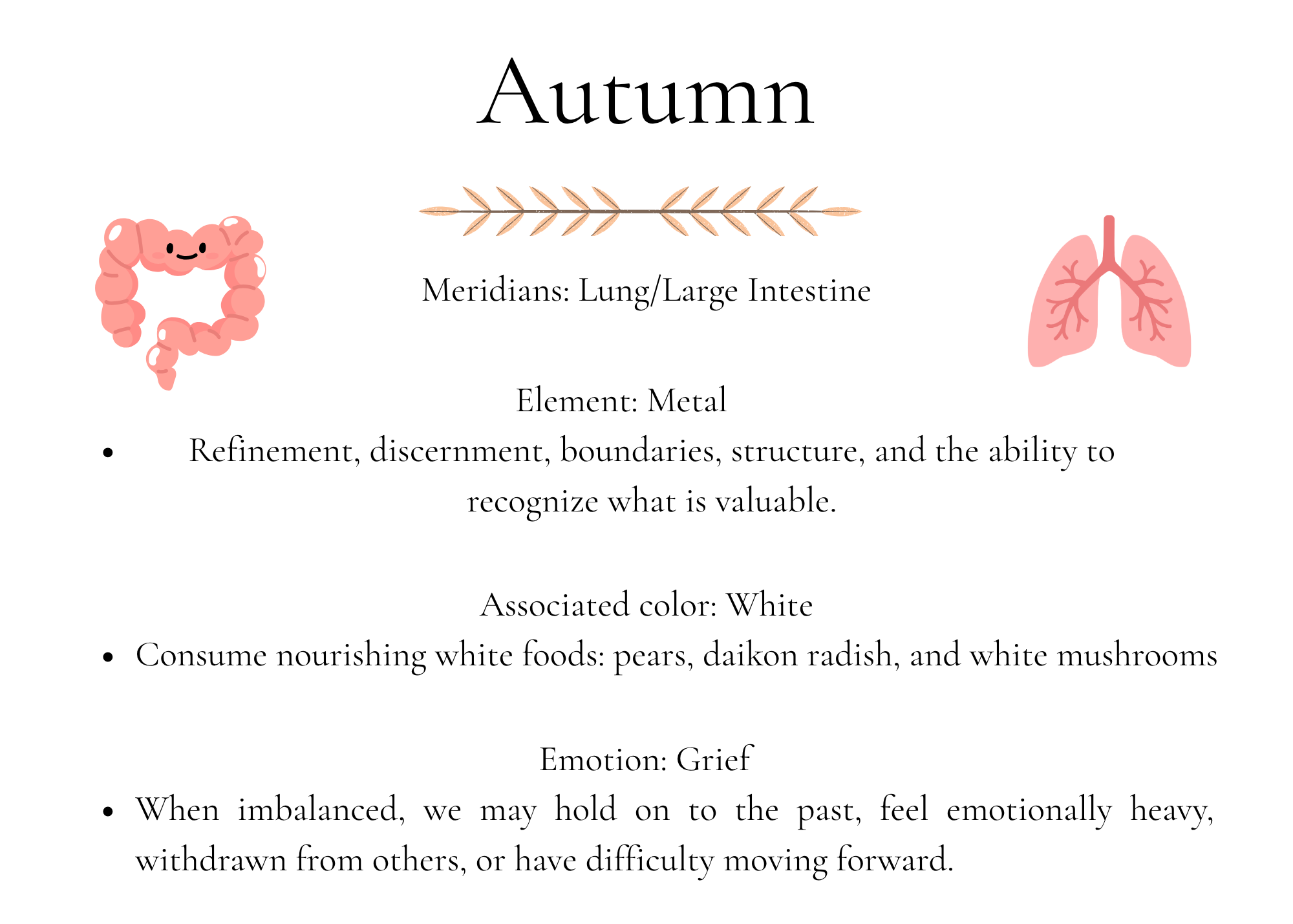
The Lungs in TCM are responsible for producing wei qi (or defensive qi) to protect the body from external influences and sickness. They also move and distribute qi and fluids throughout the body, and open into the nose.
The Large Intestine is responsible for receiving and utilizing nutrients from digestion, as well as separating and eliminating the waste.
Ways to support your body in Fall
1. Eat Seasonally
Autumn is associated with dryness, so eating foods that provide moistening and nourishing properties is important. Try to eat seasonally and favor warm, cooked meals over cold and raw options.
- Cooked/stewed fruit: especially pears, apples
- Root vegetables: squash, sweet potatoes, carrots, and pumpkin
- Nourishing porridges: oats, rice, or millet
- Soups, stews, broths, and slow-cooked meals
- Mushrooms, sesame seeds, walnuts
- Ginger, cinnamon, and warming spices in moderation, according to individual needs
2. Keep Warm
As the air chills and it is more likely to be windy, stay warm to protect your body’s yang and wei (defensive) qi, which can be likened to your immune system in conventional medicine.
- Dress in layers, especially during cool mornings and evenings
- Keep the neck and upper back covered in cold or windy weather with a jacket, sweater or scarf
- Change out of damp clothing after exercise or getting caught in the rain
- Enjoy warm baths or foot soaks as a relaxing evening ritual
- Keep the home comfortably warm and avoid prolonged exposure to cold if already chilled
3. Receiving and Releasing
The metal element is associated with grief or sorrow. This is a normal human emotion, however if a person is experiencing a Lung/Large Intestine Qi imbalance they are more likely to feel stuck in emotions such as grief and have a difficult time moving through them. Just as trees release their leaves, autumn reminds us that letting go is an integral part of renewal that will come with letting go.
- Acupuncture, daily tai chi or qi gong, and journaling can be a helpful and reflective process to incorporate
- Make time for reflection and a slower pace
- Honor what has passed and hold space for both gratitude and grief
- Practice letting go of what no longer serves you
- Seek meaningful connection with others
4. Adjust daily routine to seasonal rhythms
Aim for a consistent sleep and wake schedule
- Consider an earlier bedtime as daylight decreases, with earlier wake times to take advantage of daylight
- Choose sustainable movement such as walking, tai chi, qigong, or gentle yoga
- Rest! Use this season to intentionally not fill every minute of every day.
- Create a calming evening ritual that signals the transition from doing to resting
5. Nutraceuticals to fortify and support you through this season
These are helpful to keep on hand when needed, or if you have a propensity that requires fortification. Always check with your TCM provider to ensure they are an appropriate and safe fit for you.
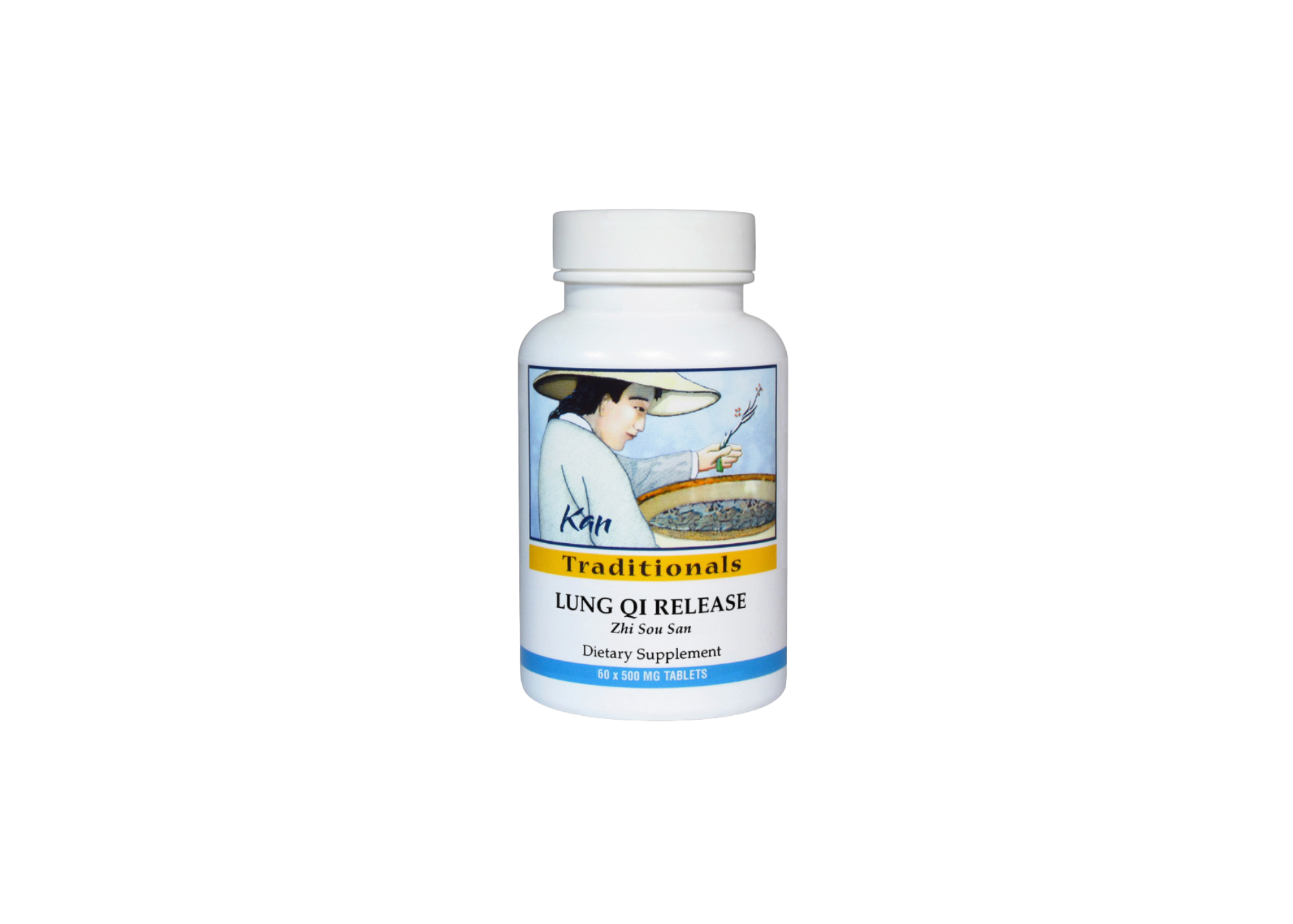
Kan Lung Qi Release
Wonderful to have on hand at the onset of a respiratory infection or phlegmy cough!

Metagenics Andrographis Plus
Immune-stimulating antimicrobial formula to take at the onset of a cold, or occasionally as a preventative to straighten a weakened immune system.
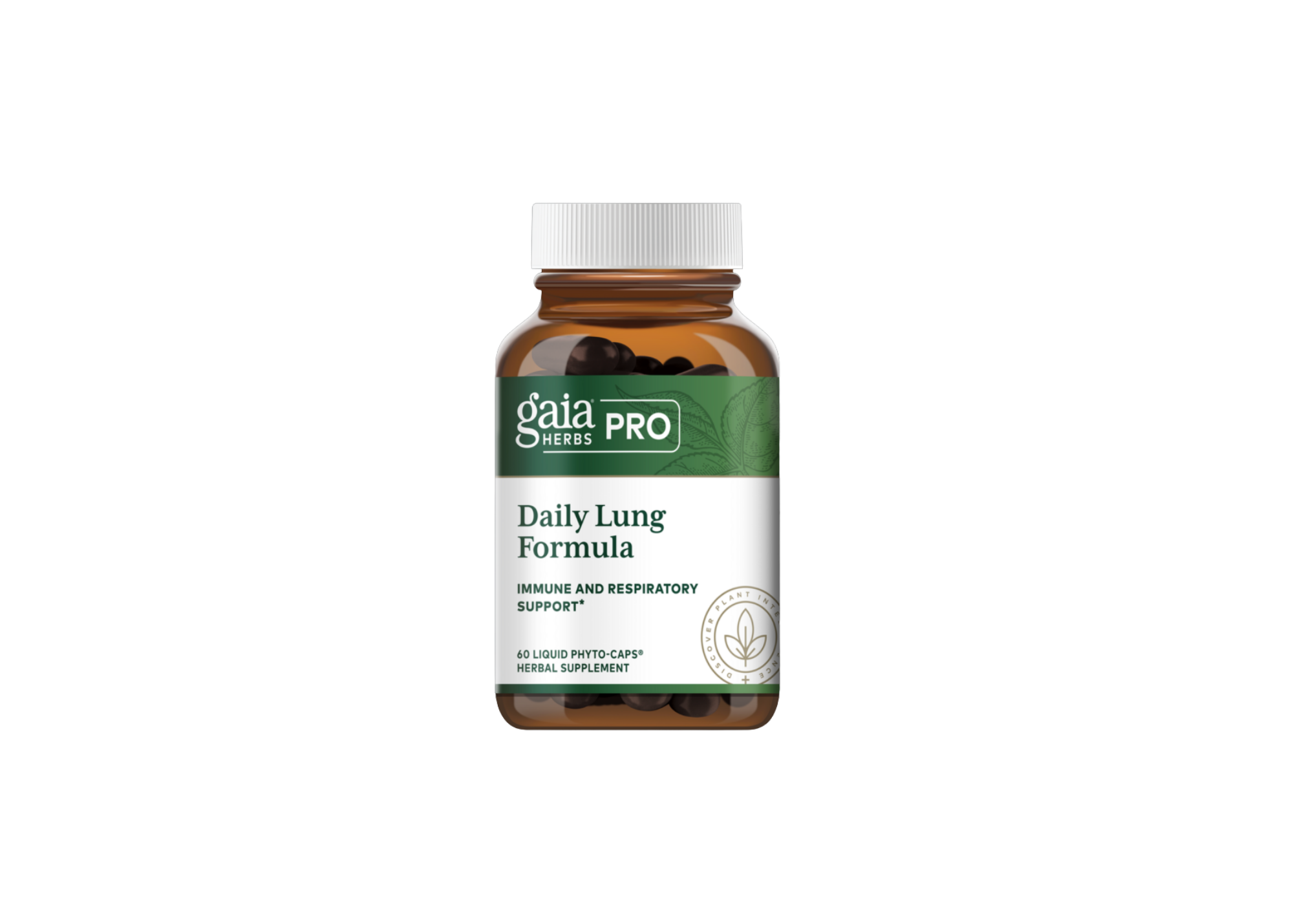
Gaia Herbs Daily Lung Formula
Another great lung-specific formula that is helpful is you tend to experience upper respiratory infections often and need a boost.
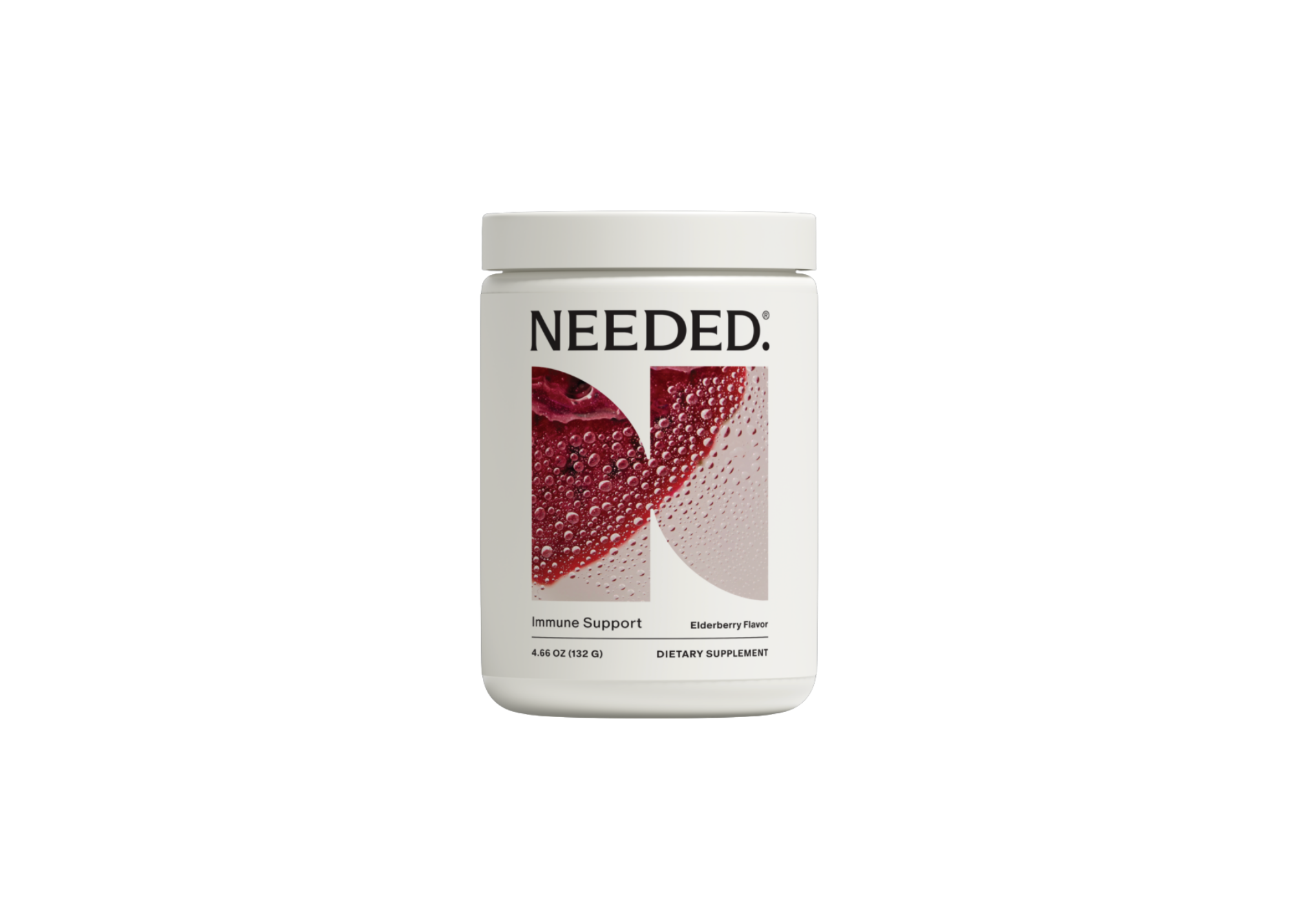
Needed Immune Support
Effective and delicious combination of anti-viral elderberry and zinc that is safe for kids and in pregnancy too!
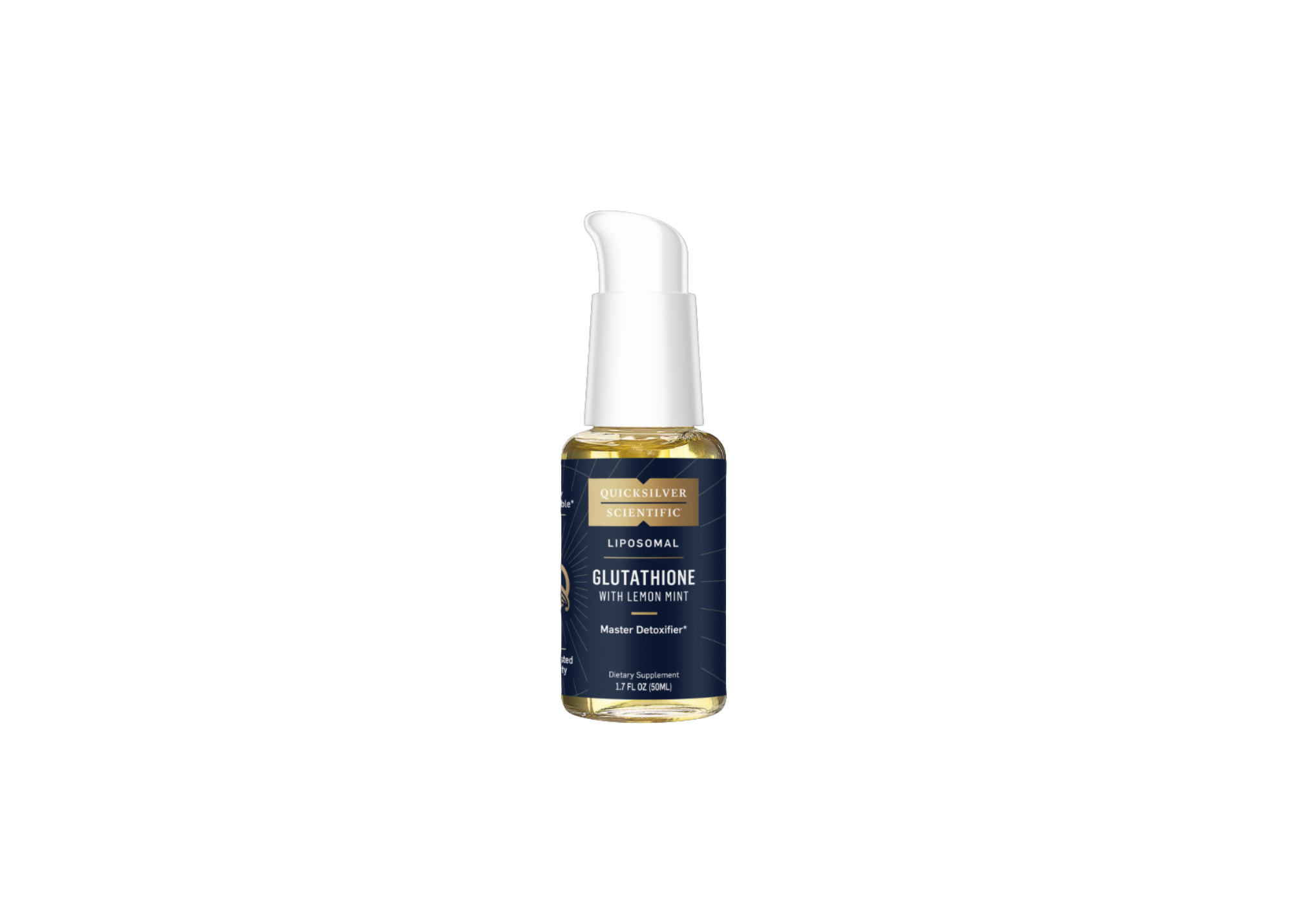
Quicksilver Liposomal Glutathione
Excellent to support your bodies natural detoxification, reduce free radicals and support lung health.
If you are interested in stocking up your medicine cabinet for Fall, physician-grade supplements can be purchased here on Fullscript. We will be offering an increased discount on all orders from November 27th - Dec 2nd!
6. Prepare for winter before it arrives
Checking in on your own health and beginning to make small, consistent and intentional acts of self-care can make a huge difference as we move through Fall and prepare for Winter.
- Check in with energy levels, sleep, digestion, and stress.
- Establish consistent nourishment and movement habits before the holidays disrupt routines.
- Make time for preventive wellness visits rather than waiting until you're depleted.
- Discuss how individualized acupuncture and TCM care may support relaxation, symptom management, and overall well-being.
- Encourage patients to address persistent concerns with an appropriate healthcare professional rather than attributing every seasonal symptom to an energetic imbalance.
Autumn is nature’s invitation to slow down and focus on gathering energy inward. We can begin facilitating this process now by intentionally focusing on seasonal foods, mindful daily rhythms, and gentle movement and nourishing practices to honor and support our body through this shift.